
The initial review on strategy literature has considerably identified blue ocean strat egy as the. research theme and its related issues has been critically reviewed and discussed to propose a Estimated Reading Time: 6 mins Ten years ago, W. Chan Kim and Renée Mauborgne wrote one of the most influential Harvard Business Review articles of all time: “Blue Ocean Strategy.”. The piece showed how companies can gain Estimated Reading Time: 2 mins Creating blue oceans builds brands. So powerful is blue ocean strategy, in fact, that a blue ocean strategic move can create brand equity that lasts for blogger.comted Reading Time: 5 mins
Blue Ocean Strategy
Summary: In this new Harvard Business Review article, the authors of Blue Ocean StrategyW. Chan Kim and Renée Mauborgne, identify mental models that undermine market-creating strategies, blue ocean strategy article review. In the ten years since the first edition of Blue Ocean Strategy was published, Professors Kim and Mauborgne have had myriad conversations with managers and executives about their market-creating strategies. Read More. Summary: This article argues that there are two types of strategy: structuralist strategies that assume that the operating environment is given, and reconstructionist strategies that seek to shape the environment.
In choosing which of the two is most appropriate for your organization, managers must consider environmental attractiveness, the capabilities and resources they can call on, and whether the organization has a strategic orientation for competing or for innovating.
Whichever type of strategy is chosen, success will depend on creating an aligned set of strategy propositions targeted at three different sets of stakeholders: buyers, shareholders, and the people working for or with the organization. Where the approaches diverge is in the nature of their proper alignment. Structuralist strategies require that the three propositions — the blue ocean strategy article review, the profit, and the people propositions — focus on delivering either low cost or differentiation.
Reconstructionist strategy propositions align around delivering both. Summary: Twenty years after its founding, Cirque du Soleil is one of the largest Canadian circuses, and is just as profitable as Ringling Bros. Circus, one of the most well-known American circuses, which had been in existence for years.
The universe consists of two oceans: blue and red. Red ocean is represented by existing industries. The industry boundaries in the red ocean are clearly defined and competition dictates the rules of the game. Companies fight for customers and the more companies that enter red oceans, the fewer opportunities for companies to enhance their profitability. Unique products are quickly benchmarked and the waters of the red ocean become even bloodier. Blue ocean strategy article review oceans are uncontested market spaces which are not touched by the competition.
Here demand has to be created from zero. Blue oceans are born either when companies create completely new industries e. eBay invented a business model of e-auction or when companies start changing red oceans from within. By destroying the boundaries between the circus and the theatre, Cirque du Soleil created something completely new from within the red ocean.
The authors Kim and Mauborgne studied such cases, which competed in 30 industries over the past years. It turns out that all successful companies used the logic of blue ocean strategy, which has little in common with traditional methods of competition in the red ocean.
The authors suggest that finding blue oceans may lead to future profitable growth. Summary: How can leaders generate a leap in performance when the odds are stacked against them? For leaders with limited resources, a demoralized staff, and an overly politicized organization and wedded to the status quo, it may be time to apply Tipping Point Leadership and Fair Process.
Tipping Point Leadership builds on the reality that in any organisation, there are factors that exercise a disproportionate influence on performance. Hence, achieving a leap in performance is not about investing steep resources or allocating long timeframes for change. Rather it is about identifying and leveraging the factors that exercise a disproportionate influence on breaking the status quo, multiplying the value of existing resources, motivating employees to aggressively move forward with change, and knocking down political roadblocks.
By focusing on points of disproportionate influence, and by reinforcing this focus by using Fair Process, tipping point leaders are able to create a sustainable performance leap quickly and at low cost. They can also simultaneously earn the trust, commitment, blue ocean strategy article review, and voluntary cooperation of employees. Theories of Tipping Point Leadership and Fair Process are based on over a decade of research into high performance organizations by Kim and Mauborgne.
Summary: How can companies create breakthroughs in value and performance? Most companies focus on matching and beating their rivals. As a result, their strategies tend to take on similar dimensions. What ensues is head-to-head competition based largely on incremental improvements in cost, quality, blue ocean strategy article review, or both. The authors have studied how innovative companies break free from the competitive pack by staking out fundamentally new market space.
Instead of looking within the conventional boundaries that define how an industry competes, managers can look methodically across them. By doing so, they can unlock latent demand and create blue oceans of new market space. The authors delineate six paths to look across in order to break out of the conventional boundaries of competition — look across alternative industries, across strategic groups within an industry, blue ocean strategy article review, across buyer groups, across complementary product and service offerings, across the functional-emotional orientation of an industry, and even across time.
Performance erodes, and talented workers head for more motivating environments. The lesson? Demonstrate blue ocean strategy article review concern for employees and make appropriate blue ocean strategy article review for them. For example, consider the trust-destroying rumors that circulate when managers withhold information during change initiatives.
Make decisions fairly. When you make choices in ways people perceive as fair for instance, you invite their input and explain your reasoningthey trust you. Building and maintaining trust are among your most crucial tasks. Blue ocean strategy article review Is there a systematic approach to achieving sustained high growth in both revenues and profits?
The authors studied high growth companies — and their less successful competitors — and found a fundamental difference in the way each group approached strategy.
The slow growth companies took a conventional approach in the sense that they did what most companies do: building competitive advantages dominated their strategic thinking. In contrast, the high growth companies paid little attention to matching or beating the competition. Instead they sought to make their competition irrelevant through a strategic logic the authors call value innovation. Summary: What makes a manager a good boss? To create a climate in which employees volunteer their creativity and expertise, blue ocean strategy article review, managers need to look beyond the traditional tools at their disposal.
They need to build trust. The authors studied the links among trust, idea sharing, and corporate performance for more than a decade. They explored why managers of local subsidiaries often fail to share information with executives at headquarters, and they studied the dynamics of idea sharing in product development teams, joint ventures, supplier partnerships, and corporate transformations.
They offer an explanation for why people resist change even when it would benefit them directly. In every case, the decisive factor is what the authors call fair process —fairness in the way that a company makes and executes decisions.
The elements of fair process are simple: Engage people in decisions that directly affect them, blue ocean strategy article review, explain why decisions are made the way they are, and clarify what will be expected of them after the changes are made. Summary: Successful innovation often starts in the field with customers, not in the laboratory with researchers. More than ever before, companies need to collaborate with customers in developing new products and services.
Market-led innovation has become important for several reasons. For one thing, customers are more powerful these days, blue ocean strategy article review.
Market-led innovation is easy to preach but very difficult to practice. By focusing on points of disproportionate influence, blue ocean strategy article review, tipping point leaders are able to create a sustainable performance leap fast at low cost.
Summary: Despite a long-term decline in the circus industry, blue ocean strategy article review, Cirque du Soleil has profitably increased revenues twenty-two-fold over the last 10 years by reinventing the circus. Rather than competing within the confines of the existing industry or trying to steal customers from rivals, Cirque created an uncontested market space that made the competition irrelevant.
It created what the authors call a blue ocean — a previously unknown market space. In blue oceans, demand is created rather than fought over; there is ample opportunity for growth that is both profitable and rapid. In red oceans — all the industries already in existence — companies compete by grabbing for a greater share of limited demand.
As the market space gets more crowded, prospects for profits and growth decline, products turn into commodities, and increasing competition turns the water bloody. There are two ways to create blue oceans. One is to launch completely new industries, as eBay did with online auctions. But it blue ocean strategy article review much more common for a blue ocean to be created from within a red ocean when a company expands the boundaries blue ocean strategy article review an existing industry.
In studying more than blue ocean creations across over 30 industries, the authors, Kim and Mauborgne, observed that the traditional units of strategic analysis — company and industry — are of limited use in explaining how and why blue oceans are created.
The most appropriate unit of analysis is the strategic move, the set of managerial actions and decisions involved in making a major market-creating business offering. Creating blue oceans builds brands. Indeed, so powerful is blue ocean strategy that a blue ocean strategic move can create brand equity that lasts for decades.
Summary: How do you leave rivals behind while sustaining spectacular growth for your company? Invent entirely new markets where no competitor has yet ventured. Consider Sony, which conceived the personal portable stereo market with its Walkman. Sony grabbed market share from the boom box and transistor radio markets — and attracted joggers and commuters into the new market. To create new markets, shift your focus from building and selling products to satisfying consumer needs in radical ways.
How can we better serve customers our industry has neglected? This Harvard Business Review On Point Collection helps you stake out new market spaces, dominate them with unassailable products and services and spur unprecedented growth for your business. HBR On Point Collection include an overview and three full-text HBR articles, each with a synopsis and annotated bibliography. Chan Kim and Renee Mauborgne HBR reprint Summary: How can you lead with your hands tied? How can you generate a leap in performance when everything seems stacked against you?
Think limited resources, a demoralized staff, politics, and an organization wedded to the status quo. The answer rests in applying what we call Tipping Point Leadership. The theory of tipping points, which has its roots in epidemiology, hinges on the insight that in any organization, fundamental changes can happen quickly when the beliefs and energies of a critical mass of people create an epidemic movement toward an idea. Key to unlocking an epidemic movement is concentration, not diffusion.
Tipping point leadership builds on blue ocean strategy article review reality that in any organization there are factors that exercise a disproportionate influence on performance.
Hence, contrary to conventional wisdom, meeting a massive challenge is not about putting forth an equally massive response where gains in performance are achieved by proportional investments in time and resources. Rather it is about conserving resources and cutting time by focusing on identifying and then leveraging the factors of blue ocean strategy article review influence in an organization.
The key questions Tipping Point Leaders should answer are: What factors or acts exercise a disproportionately positive influence on breaking the status quo, on getting the maximum bang out of each buck of resources, on motivating employees to aggressively move forward with change, and on knocking down political roadblocks that often trip up even the best strategies?
How To Differentiate Your Business With BLUE OCEAN STRATEGY - Book Summary #3
, time: 19:01Harvard Business Review | Blue Ocean Strategy Articles
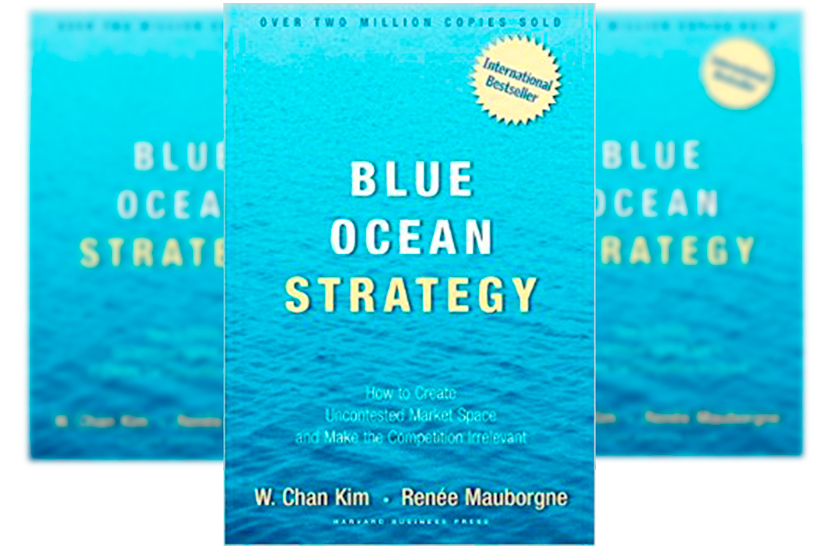
Ten years ago, W. Chan Kim and Renée Mauborgne wrote one of the most influential Harvard Business Review articles of all time: “Blue Ocean Strategy.”. The piece showed how companies can gain Estimated Reading Time: 2 mins Creating blue oceans builds brands. So powerful is blue ocean strategy, in fact, that a blue ocean strategic move can create brand equity that lasts for blogger.comted Reading Time: 5 mins The initial review on strategy literature has considerably identified blue ocean strat egy as the. research theme and its related issues has been critically reviewed and discussed to propose a Estimated Reading Time: 6 mins

No comments:
Post a Comment